Author: Mohammad Amin

  • Sterlings, Trippiers overshadow Beckham, Rooney era

    Sterlings, Trippiers overshadow Beckham, Rooney era

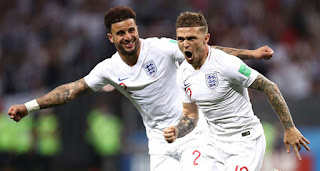
    SOCHI, Russia: Despite the defeat against Croatia, England has surprised everyone at the World Cup with a very young side who almost made their second final after 1966.
       
    The past English sides have been mocked and jeered not by their fans but by the experts, who felt that the Three Lions were simply over-rated.

    It has been true at all the World Cups barring the 1990 edition (in Italy) where they had reached the last four.

    “Don’t look back in anger,” the fans sang to heartbroken players who stood drained and defeated in front of them on Wednesday night.

    Whether it’s their set-piece innovations or tenacity, Gareth Southgate inculcated a self-belief which was so crucial to their survival in the tournament.

    A country which boasts of the best and richest leagues in the world has never been able to garner respect and awe from their opponents and football-lovers.

    The David Beckham or Wayne Rooney era was a hyped one, with the former was more of a glamourous model than a player who could turn a match.

    Yes, Beckham was good in free-kicks, but that’s not how a player should be judged. He was popular among his legion of women fans, but never been an outstanding player like Luca Modric.

    There was a definitive lack of cohesion in those English sides which had one Beckham, one Rooney and Steven Gerrard.

    But Russia 2018 may have changed all that and with a positive road map and the Sterlings, Rashfords, Allis and Trippiers stand to gain a lot.

    They’re the cream of English football including their inspirational captain Harry Kane, who tops the scoring chart with six goals.

    But the Tottenham Hotspur forward was not in his elements and missed a couple of chances including one header which went wide in stoppage time against Croatia.

    “With experiences, they’re going to become only better in next two years. There’s a lot of positives to take from this tournament,” said Southgate, who was associated with his country’s junior development programmes.

    If his side wins against Belgium in the third-match play-off in Saint Petersburg on Saturday, it will be a consolation prize but good enough to bolster English football.

    Trippier scored a gem of a goal from a free-kick fifth minute after start. The shot, which curled over the Crotian wall and landed into the net, was all about confidence laced in it.

    England chugged along, but lost the plot once Modric re-energised the team with his great piece of work, culminating in goals from Ivan Perisic (61st) and Mario Mandzukic (extra-time).
    http://www.khelupdates.com

  • Akinfeev’s hand-feet combination knocks out Spain

    Akinfeev’s hand-feet combination knocks out Spain

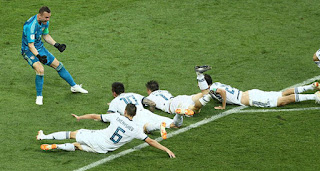
    MOSCOW: Russian goalkeeper Igor Akinfeev used his hand and feet in the penalties to help Russia overcome Spain in a Round of 16 match here on Sunday.

    On a rain-drenched evening at the Luzhinki Stadium, the 32-year-old showed excellent athleticism by using the heel to deny Aspas in the last shot as the hosts overcame the 2010 winners 4-3 on penalties after match ended 1-1 in extra time.

    The Russian victory against a top side could be a turning point for sport’s future in the country as it’s still not one of their favourite games.

    Basketball, volleyball and ice hockey continue to attract the Russians. Lack of international results may have had a deep impact on football not becoming a main sport.

    Russia has reached the quarterfinals for the first time after 1966 as the erstwhile USSR.

    Akinfeev was in great form after he made couple of excellent saves in the match including the one from substitute Rodrigo’s fiercely-driven shot while the defenders cleared Carvajal’s second effort from the rebound.

    “I’m not the man of the match, the man of the match is our team and our fans,” said the Russian captain.

    The beginning wasn’t good for Russia as Sergey Ignashevich own-goal opened scoring in the 12th minute, but Artem Dzyuba equalised from the spot in 41st following a handball by Pique.

    But the Russians fought tooth and nail despite not enjoying the best of possession. They were a shade better in the second half, with a flurry of attacks had put the Spanish backline under pressure.

    The early own-goal made things easier for the former champions despite Russian defenders worked hard to stop Asensio, Isco and Aspas.

    The Spanish worked hard, but little results on the counter attacks as the hosts played their hearts out.


    (http://www.khelupdates.com)

  • Messi, you’re just a Barca brand

    Messi, you’re just a Barca brand

    By the time
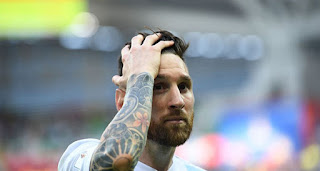
    the next World Cup takes place in Qatar, Lionel Messi would be 35.

    Logically,
    the Argentinian has played his last World Cup at the Kazan Arena on Saturday.

    But why did
    the entire world rooted for the Barcelona star at all these World Cups, knowing
    that he is only good in his club shirt?

    Comparisons
    with Cristiano Ronaldo over these years have fuelled the expectations of fans
    across the globe, but Messi had deprived them of further celebrations in Moscow
    and elsewhere.

    He may have ignited
    hopes for his countrymen in the last group match against Nigeria in Saint
    Petersburg last week, but that wasn’t enough.

    World Cup is
    a big tournament and that’s where a player like him should’ve dazzled.

    In the last one
    decade since his debut with Barcelona in 2005, Messi enjoyed a near demi-God
    status across the various continents and also drew comparisons with compatriot Diego
    Maradona following that epic goal against Villa Real in La Liga.

    From journalists-turned-Barca
    fans to a tea-seller on a Kolkata street, everybody hailed him as the next star
    who resembles Maradona.
    Achievements
    speak volumes for a player. That’s why we still recollect Maradona’s goal of
    the century against England.

    However, Messi
    had flattered to deceive in last three editions and remained success-starved at
    all the World Cups he had played for his country.
    You don’t
    have to be a great football expert to understand Messi’s shortcomings.

    He is an
    out-an-out Barca player. I don’t doubt his nationalistic feelings, but he never
    shown that Maradona-like intensity in the World Cups.

    In fact, the
    world media played a key role in making Messi a brand. From comparisons with Ronaldo
    to mouth-watering duels between Real Madrid and Barca, fans were made to regale
    Messi’s brilliance in La Liga.

    But his brilliant
    piece of work wasn’t reflected in him at the sport’s grand stage, where a 19-year-old
    Kylian Mbappe grabbed all the attention.

    The
    Messi-Ronaldo battle has divided a generation of youth, who carry them from
    drawing rooms to college campuses.

    Even most pro-Messi
    journos often argued that he failed because he didn’t quite the support from
    his team-mates. A player’s class is determined not by what he does on the
    field, but also how he leads the team. Maradona inspired a generation of young players
    like Jorge Burruchaga and others to World Cup glory 32 years ago.

    Well, Maradona
    was a rare talent and leader, who played for his country and club with the same
    intensity. He’s an icon at Napoli, but when he turned out for the blue stripes,
    he was simply outstanding.

    Finally, I
    can heave a sigh of relief. Those Maradona-Messi comparisons have come to an end,
    and Argentina will have to wait for another genius before they revive their lost
    glory. 

    (In Moscow, June, 2018)

    www.khelupdates.com


  • Spasiba, Russia — How the World Cup United Sport and History

    Spasiba, Russia — How the World Cup United Sport and History

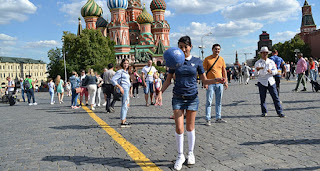
    MOSCOW: Red Square is steeped in history, but these days it has become the centre of the world—at least for the FIFA World Cup.

    Once a silent witness to defining moments of the Second World War, the iconic square is now alive with colour and sound. 

    The streets that once echoed with military marches are today lined with shops, sidewalk cafés and hotels buzzing with football fever.

    Just opposite the Kremlin, visitors encounter some of the world’s finest brand stores and even an ice-cream parlour—an almost surreal contrast to the weight of history that surrounds the area.

    At the heart of the square, the Fan Zone has become a magnet for children and young supporters, filled with cheers, chants and celebration. The older generation, however, gravitates toward quieter reflections—taking sombre walks past Vladimir Lenin’s mausoleum or pausing to admire the statues that stand as reminders of Russia’s past.

    In many ways, the tournament has seamlessly merged sport with history. For those intrigued by Russia’s role in the Second World War, it takes little effort to rewind the clock. Find a quiet corner of the street and imagine the biting cold of November 7, 1941, when Joseph Stalin delivered his historic speech here, addressing Soviet troops just before they marched off to war.

    Today, fans from every corner of the globe gather here each afternoon, exchanging pleasantries, embracing strangers, and singing the universal chant of “ole, ole.”

    At a time when the world is often divided by heated arguments and proxy conflicts, the competition has offered a rare moment of unity.

    It is not unusual to see a Mexican fan hugging two Russian women right across from the majestic Kremlin, or Tunisians posing for photographs with Spanish supporters beneath the statue of Georgy Zhukov—the most decorated general of the Soviet Union and a central figure in the defeat of Nazi Germany.

    Near the iconic Saint Basil’s Cathedral, a German war veteran casually practiced ball-control skills with his grandchildren, eager to be part of this shared celebration. Nearby, two young Spanish girls cooled themselves with ice-cream cones on a sunny afternoon, gazing in awe at the Kremlin’s towering red walls.

    The significance of the tournament extends far beyond football. By bringing the world together in a place so deeply marked by conflict and sacrifice, the FIFA World Cup has transformed Red Square into one of the most powerful advertisements for peace. (www.footballwallah.blogspot.com)

  • England’s ‘Summer of 66’ and a thought…

    England’s ‘Summer of 66’ and a thought…

    MOSCOW: Englishmen born in the 70s must have watched Geoff Hurst’s celebration video clips perhaps more than the Hollywood classic The Godfather.


    The English striker’s controversial goal against West Germany in the 1966 FIFA World Cup final at Wembley still gives them kick, but sadly doesn’t inspire their footballers anymore to emulate their team’s only World Cup triumph.

    England’s 1966 World Cup victory is just a piece of memory which the Englishmen flip through the pages after every four years, and they still hope their football teams will emulate Bobby Moore and company.

    But those who understand the game and have followed English football post 70, would agree the ‘Summer of 66’ was a ‘fluke’ as all their past teams had struggled at the successive World Cups.

    Even the Indians, who are so much influenced by ‘Made in England’, have never been a die-hard fan of their past colonial masters, who had taught them football.

    Not just the Indians, everybody who even possess the slightest knowledge on their sport had never put their money on them at any of the quadrennial competition, not even when Gary Linekar and David Beckham played.

    England remain a gross underachiever at the sport’s biggest stage — like the South African cricket team.

    Though Gareth Southgate’s young side showed promise against Tunisia last Monday, still there’s a long way to go in Russia.

    Southgate adopted a modern formation with a three-man backline, quick-witted wingbacks and more flair in midfield. But the win against Tunisia was underlined by a set-piece model.

    The Three Lions will have it easy against Panama unless there’s any shocker waiting for them.

    However, the real test would be against Romelu Lukaku and Eden Hazard’s Belgium on June 28.

    The entire world watches their league, but not their national team — the likes of Kane, Lingard, Alli are good players, but definitely not the best.

    Most coaches always felt that none of the clubs does enough grass root work as they would travel to Latin America or Africa to buy talent.

    Can anyone give a count of their players in any of the European leagues? The likes of Beckham or Wayne Rooney travelled to the US post their prime, and MLS is one of the best competitions.

    So, you’re left with the Kanes and Lingards who win accolades at home but the day English footballers leave their comfort zone and play in other parts of Europe, they will become better. www.khelupdates.com


  • Post 1986, Brazil’s football philosophy is in a confused state

    Post 1986, Brazil’s football philosophy is in a confused state

    MOSCOW: As the most popular football side in
    the world, Brazil always excite us.

    Even the media
    admire them — more than 200 newspaper journalists and 100 photographers are
    registered for tomorrow’s Brazil versus Switzerland game.

    At the Rostov
    Arena, children have welcomed the Brazilians to the city, with their paintings
    spread around the city. Such is the love and affection that they’ve been
    enjoying since ages.

    Everybody
    loves the Selecao, but off late Brazil doesn’t resemble the teams of 70s and
    80s. The attacking flair, which won them millions of hearts across the globe,
    is now a thing of the past.

    The team’s current
    style is not even a sequel of what Tele Santana had produced at the 1982 and
    1986 World Cups and as school children, we were thrilled to watch
    Socrates-Zico-Elder-Falcao indulge their love of feints, tricks and back heels.

    The
    free-flowing approach has been replaced by a more cautious one ever since their
    players started playing in the gruelling European leagues.

    No wonder their
    football philosophy is in a confused state. Just like any Hollywood classics, those
    golden days of Samba can’t be re-created but, at least, Brazilian coaches can draw
    inspiration from Santana.

    The drubbing
    against Germany at home four years back is still fresh in our mind. Yet, everybody
    expect them to bounce back in the World Cup and impress their fans with subtle
    skills added with searing pace.

    “The work we
    have done elevates the expectations, but also brings us peace. I’m very happy
    about the level of performance we have showed so far. I hope we can now
    reproduce this under pressure,” said Brazil coach Tite on Saturday.

    Sounds all
    fine, but as we’ve seen, Brazil is now a shadow of their own glorious past.

    The team’s
    talismanic forward Neymar recently underwent a surgery and returned to action couple
    of days ago in a pre-tournament friendly.

    The
    Paris-Saint Germain star also scored a goal, but still we aren’t convinced till
    he strikes the ball hard against the Swiss.

    “Neymar is
    still not 100 per cent, but he is very privileged physically. The level he has
    displayed in his sprints in high velocity has been impressive. But still he has
    something to gain. It should happen sooner rather than later, hopefully,” added
    Tite.

    Back in
    2013, Switzerland won 1-0 in Basel. Only four Brazilian starters from that
    friendly match are here in Rostov: Thiago Silva, Marcelo, Paulinho and Neymar.

    We’ll have
    to wait till tomorrow to see if Neymar unleashes his power to avenge their
    five-year-old defeat.

    But, good
    luck Selecao! 
    www.khelupdates.com
  • Why African teams couldn’t become a Croatia or Iceland

    Why African teams couldn’t become a Croatia or Iceland

    MOSCOW: There’s something about the African football teams. Hugely talented, but still remain success-starved at the sports biggest platform.

    During an informal chat with Moustapha Hadji in Doha few years back, the Morocco legend and 1998 World Cup hero said that ‘it’s always difficult to handle a bundle of talents’.

    Quite rightly so. When you’ve an entire team of excellent footballers, there’ll bound to have ego clashes in the locker room so much so that it becomes difficult for the coaches to handle each of them.

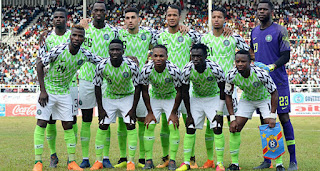
    Nigeria’s Super Eagles has always been a fantastic squad since the days we’ve started watching Nwanku Kanu, Finidi George and others at the 1994 World Cup.

    All five of Nigeria’s World Cup finals victories out of their 18 matches have been against European opposition.

    The Super Eagles beat Bulgaria 3-0 and Greece 2-0 in 1994, Spain 3-2 and Bulgaria 1-0 in 1998, followed by Bosnia and Herzegovina 1-0 in 2014.

    At this year’s edition, Nigeria has come with one of the youngest teams, with 18 players set to take part in a FIFA World Cup match for the first time.

    Only skipper John Obi Mikel, Ahmed Musa, Victor Moses, Ogenyi Onazi and Kenneth Omeruo have previously played in the World Cup.

    But one of the debutants, William Troost-Ekong, is relishing the chance for them to prove themselves on the world stage.

    “Many of us will be playing at the World Cup for the first time, but this may work in our favour as we might surprise others. We will play without fear,” he said.

    At the most, the Gernot Rohr-coached side will qualify to the next round, which they had in the last two editions. But Nigeria, like Senegal or Cameroon, have always failed to live up to our expectations.

    The African players are the top exports to the world’s glamourous leagues. Even an average player earn good salary in the Middle-East, south-east and south Asian countries.
    But their football setup is like any other third-world nations, where the growth is slow due to the faction rivalries, corruption and lack of professionalism. That may be some of the other reasons why they couldn’t become another Croatia or Iceland.

    Africa is a relatively poor continent. There’s lack of facilities and kids do not get proper nutrition which can help in their development.

    Moreover, they are not exposed to the High Performance Facilities though there are exceptions like Didier Drogba and Samuel Etoo but players like them are few in numbers who went to France early in their careers and made an impact.

    In the end, all the good brains leave Africa due to wars, dictators and football is managed by people, who’re favoured by dictators and warlords. http://www.khelupdates.com

  • Not a happy Eid for the Saudis

    Not a happy Eid for the Saudis

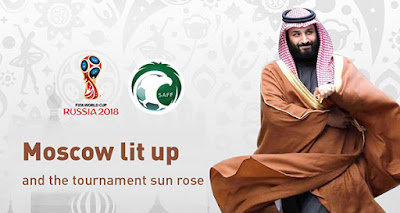
    MOSCOW: Around the time Russia humiliated Saudi
    Arabia in the opening match on Thursday evening, fans back home sighted the
    moon on the 29th day of the holy Ramadan month.

    The new moon
    ended the rigorous fasting month with a new hope and beginning, but the Saudis may
    have spent a sleepless night following their 5-0 drubbing by the hosts at the
    Luzinhki Stadium.

    The Green
    Falcons, like most other Arab teams, are mere pushovers at the football’s grand
    stage. Nobody expected a big win for the Saudis. A draw would’ve been a fare
    result for the country, where football is yet to be a part of culture.

    Saudis may
    be the most passionate football-lovers, but it’s mostly confined to their
    domestic competitions where one can expect a fierce rivalry between their top
    clubs – Al Ahli and Al Hilal.

    The league
    was professionalised only very recently, with their players being paid huge
    chunks of riyals as their wages. It’s not that they lack quality players, but they
    don’t move out of their plush lifestyles in Riyadh or Jeddah.

    Players from
    South Korea, Iran and Japan ply their trade in the European leagues. But we’ve
    never heard of a Saudi footballer joined any lower-ranked English or Spanish
    clubs.

    One of their
    legends and star in their maiden World Cup campaign in 1994, Sami Al Jaber was
    once loaned to Wolverhampton.

    Had more
    players joined some European leagues, the motivation would’ve been boosted and skills
    polished under the experienced European coaches.

    The Arabs,
    in fact, the Saudis, need to change their mentality. Don’t just flaunt top
    European brands, but do try and play the sport with or against the best teams and
    players.  

    And, there
    is a piece of advice for their country’s football federation — shed that arrogance
    and intolerance.

    Sacking
    coaches is something that most Middle-East nations love to do, but Saudi Arabia
    is more ruthless than others.

    On a
    football field, you’re a worker. It doesn’t matter which car you drive – Land
    Cruiser or Range Rover – the coach is your boss.

    Give him
    time and respect his work. But the logic doesn’t work in the Arab world, more
    precisely in the region’s largest country.

    Dutchman Bert
    van Marwijk led them through the most recent qualification campaign. He stepped
    down after negotiations failed on a new contract. 
    His
    successor Edgardo Bauza was also fired just two months in the job after in
    November after unimpressive performances in five friendlies.

    The
    Argentine was replaced by Juan Antonio Pizzi, who has led his own country to
    the 2016 Copa America final but it won’t be a surprise if the Chilean board the
    next flight to Santiago during the tournament.

    The defeat
    has hurt Saudis’ pride badly while their infamous arrogance was cut into pieces
    on a football pitch.

    It was a lesson
    that they learn quickly – money won’t buy you everything.
  • Well done, Chhetri!

    Well done, Chhetri!

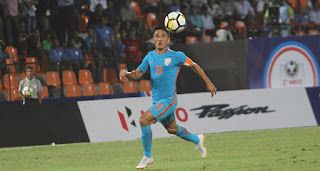
    This was the time when ISL was beyond anybody’s imagination, social media was non-existent and National Football League (NFL) was struggling to maintain with its charm. It was during that era, almost 15 years ago, when I saw a diminutive Sunil Chhetri in join Mohun Bagan jersey.
    “Who is this Chhetri,” I asked one of my fellow writer during a NFL match at the Salt Lake Stadium in Calcutta.
    My obvious curiosity was not because he came from my second home, but due to the fact that he wasted at least a dozen of gilt-edged chances on that muggy afternoon.
    Chhetri, then a 19-year-old, scored just eight goals in three seasons at Bagan, which finished in the bottom half of the league table.
    For a young footballer, Calcutta seemed to be the right choice as Delhi teams, where he played for City Club, don’t even get outstation invitations.
    Calcutta wasn’t an unknown city for the Delhi boy, who had his schooling at the Fort William where his father was employed with the Indian Army’s Eastern Command.
    It was difficult to ignore the temptation of playing in Calcutta, where he returned as a young footballer. But it was a difficult start as he had failed to soak the pressure of playing in front of vociferous Bagan fans.
    The Delhi youngster, perhaps, succumbed to the pressure. And, after a not-so-impressive stint at Bagan, he packed off his bag to JCT Phagwara, which I felt was the turning point in his career.
    Three years later when I met him at Ludhiana in January, 2007, Chhetri was a completely different player. He exuded confidence in his words and in the 18-yard-box.
    From 2005 to 2007, Chhetri scored 20 goals including 12 goals in a single season when JCT finished second in the I-League and he earned the “Player of the Year” award.
    The real grinding was done at Phagwara, where he played with and against the sturdy and taller Punjabi footballers.
    It was an amazing transformation for someone, who had shaky start in Calcutta.
    At Phagwara, he trained hard under Sukhwinder Singh as there were no other distractions in the industrial town apart from driving down to Delhi home in the weekends.
    Playing alongside Baichung Bhutia in the national team was the second most important thing that boosted his career. Before settling for Chhetri, former India coach Bob Houghton had even tried Sushil Singh and Abhisek Yadav but none could match Chhetri’s consistency.
    At the two Nehru Cups in Delhi, he was in blistering form followed by the AFC Challenge Cup which paved the way for the Indian side to qualify for the 2011 Asian Cup here. Chhetri was the only shining star, who scored two in India’s three goals in an otherwise failed campaign.
    Just like any successful sportsman, the 33-year-old has overcome failures and disappointment in his initial years with a positive attitude. And, that’s what has helped him carve a niche in Indian sports. 
    Well done, Chhetri! (www.khelupdates.com)
  • Bhutia, did you or Houghton ever think of creating a core Team India?

    Bhutia, did you or Houghton ever think of creating a core Team India?

    With due respect to your football credentials, it’s difficult
    to understand your quote…‘but still, we are far lucky than what we got in 2011.
    Compared to the last Asia Cup (appearance), we are happy and lucky’.

    I couldn’t really understand what you actually wanted to
    convey to your fans and followers.

    You also took a critic’s role by saying that Stephen
    Constantine’s rotating policy is not helping Team India.

    Mr Bhutia you want to don multiple mantle and that becomes
    difficult to understand your motives. If football was your first love and
    priority, you wouldn’t have joined politics.

    After you had quit football, you were clueless about your
    future. It wasn’t difficult to gauge your political ambition – Lok Sabha and
    then State Assembly elections.

    Your dreams crashed while representing a leading Bengal party,
    but again you have started to dream and launched a new political party in your
    own state.

    Those who’ve covered football during your career would say,
    ‘yes, he had in him to become a team leader’. No wonder, you dominated the
    Indian football in the last couple of years despite carrying injury.

    Instead of criticising Stephen’s rotational philosophy, you
    should have credited his efforts. At least, he isn’t Bob Houghton, who only
    listened to you on team selection and then selected a bunch of injured players for
    the 2011 Asian Cup in Doha.

    Mr Bhutia, a team’s ability or capability to do well in a
    competition depends a lot on multiple factors. But the main criteria is honesty
    and integrity besides hard work and passion laced with a sense of
    responsibility. That’s what Stephen had been doing in the last three odd years.

    India’s campaign at the 2011 edition was a flawed one. Not
    because the team lacked talent or integrity, but it had at least half a dozen
    of injured and unfit players including you.

    Your memory may have become slightly weak. So, let me help
    you to turn the clock back to 2009 when the preparation was in full swing for
    the Doha edition.

    Injury had slowed you a down in your last few years, but you still
    hanged around. Houghton was your PR man, who would always say 1000 good things
    about your importance as a player and leadership qualities (you can read his
    quotes on the google).

    India was clubbed with Australia, South Korea and Bahrain in
    Doha. But much before the tournament, Houghton probably knew the team had no
    chance to qualify beyond the group stage.

    It’s not the question of who you play, but when you’ve a team
    full of injured and unfit players then the task becomes a little
    difficult. 

    Houghton’s propaganda to create a ‘Team India’ for the Asian
    campaign in Doha never materialised. It was only a PR stunt and you had played
    an important role.

    You struggled with a niggling knee injury and earned sympathy
    from the media. You wanted to quit football on a big stage. Don’t you agree,
    your selfish motives hadn’t done anything good to the team then?

    Renedy Singh’s left foot was good, but weren’t strong enough
    to win the trophy as he too struggled to stay fit.

    Now you’re talking about a core group. Did you or Houghton
    think about it seven or eight years ago?

    A second team should have been in place after Houghton took
    over in June, 2006. However, some of the juniors and senior players who had
    performed well in the domestic competitions were excluded from the Doha-bound
    squad.

    Shanmugam Venkatesh, who was also in his 30s like you, was
    one of the finest attacking midfielders. He did well with Pune FC, but didn’t
    get a chance. Striker Mohammad Rafi, who was in thick of goals, was omitted.

    Do you still think an ineffective Sushil Singh deserved a
    place in the Asian Cup team and, that too as your replacement?

    What still remained a mystery was the way Houghton handled the
    team as he banked on you and other unfit players.

    You had wanted to end your career on a global platform. Once
    again, a personal ambition at the cost of Team India. You had even convinced
    AIFF, media and Houghton that Asian Cup was important for you.

    I admire your patriotism. But Mr Bhutia was it morally
    correct to block a place for some, who were fit and deserved to play for the
    country?

    At the beautiful Al Sadd Stadium on a lovely winter afternoon
    in Doha, you didn’t even play. From the dugout, you backed up your team-mates,
    who were beaten by the sheer pace of the Aussies. We lost 4-0.

    If you were to cheer for your team, you could’ve travelled on
    your own. 

    In the second match against Bahrain, you were once again at
    the dugout. You weren’t fit to be in the team, but nobody had the gut to say anything
    against you because you were a ‘leader’.

    In Doha, Houghton was tight-lipped on the team’s fitness and
    blamed the Indian conditions for spoiling the career of Indian players. Barring
    goalkeeper Subrata Paul, Sunil Chhetri and Syed Rahim Nabi, most of the first
    XI players including you were unfit.  

    Oh yes, that 15-minute ‘special appearance’ against the South
    Koreans on a rain-hit evening at Al Gharafa Stadium was a memorable one for
    you, but definitely not for Indian football. (www.khelupdates.com)