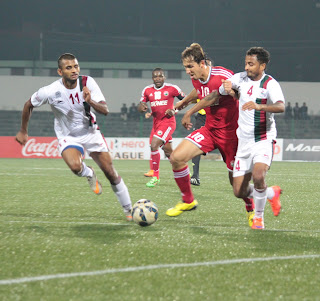
Author: Mohammad Amin

  • Let’s not become emotional

    Let’s not become emotional

    The last time I had covered a football match at the Salt
    Lake Stadium was in September, 2011, when Lionel Messi came with the Argentina
    team during their international friendly against Venezuela.

    Covering a football match was never a pleasant one in the
    Indian stadia. 
    The Calcutta venue had never been an ideal place for either the
    scribes or spectators — the empty floors just below the media box always remained
    flooded with plenty of fresh urine samples; during and after the match rowdy fans
    would spit or drop empty flower vases from the top.
    No wonder then families avoided such venues where lack of security had always been pathetic. Getting them engaged was the biggest challenge.
    Sport is an entertainment which AIFF and its associated
    state units couldn’t fathom. All they wanted was a gallery packed with Bagan-
    East Bengal fans.
    If the ISL helps stakeholders understand that the sport can
    comprise an afternoon or evening’s entertainment for the family, it will raise
    the profile of Indian football. For that to happen, toilets must be clean, refreshments
    available, comfortable seats and a full-proof security.
    Last Sunday, the new tournament started with a new hope. The
    glamour and glitz gave rise to a belief that Indian football has a great future
    ahead. The concoction of bollywood, cricket and corporate was served to the outside
    world, brandishing India’s booming economy.
    But the moot question is whether it’s going to be a
    sustainable product. Whenever any big non-cricketing event happens in India, it
    creates a buzz and then fizzles out quickly. The AIFF general secretary, Kushal
    Das, described this competition as an adrenaline boost. But with Indian football,
    where we’re mere pushovers at the international level, we shouldn’t be emotional.
    Recently, Sourav Ganguly, owner of Atletico de Madrid, said that
    no sport, other than cricket, can guarantee a future in India, leading him to
    feel that his football venture may never break even.  
    The sport can get better if all the eight franchisees contribute
    to the game’s growth. Till now, all the money-infested teams have talked big
    about the glamorous event, but none had said anything about the grass-root
    programmes and infrastructure.
    We need to ask ourselves, ‘do we’ve enough grounds for a village
    youngster to kick around’ or ‘do they’ve free access to the limited facilities’?

    Zico, Alessandro del Piero, Nicolas Anelka are definitely
    big names in football world. They’ll raise their team’s profile in ISL, but sustained grassroots development and stadia are the two most important things that Indian
    football need right now. 
  • Is ISL really good for Indian football?

    Is ISL really good for Indian football?

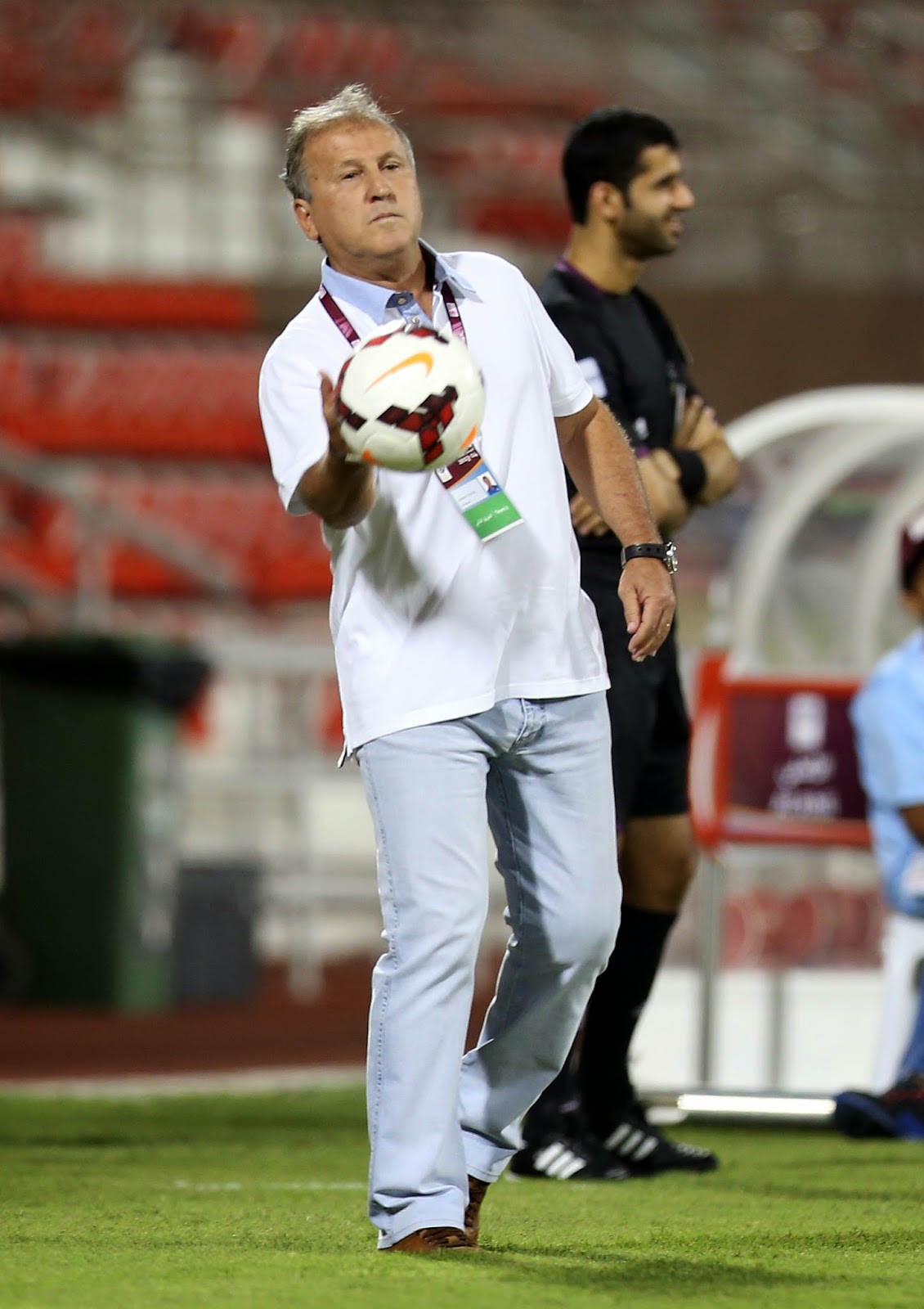
    Zico

    Zico, Alessandro Del Piero, Nicolas Anelka, and even Marco Materazzi.

    Big names, yes, but they aren’t carrying any magical wand that can change Indian football’s fortune overnight.

    By having these veteran stars in a pajama football league called the Indian Soccer League, if the federation thinks it’s one of the biggest things to happen in the country, then I’m sure they are taking all of us for a bumpy ride.

    Today, the Indian team had another disastrous outing at the Asian Games in Incheon. We’re used to such humiliation every four years. At the same time, the federation is all geared up to host the pajama-drama and still claims that developing football in India through retired world stars is a kind of revolution.

    Someone in the officialdom must be kidding.

    Losing out to a strife-torn Afghanistan in the SAFF Championship, followed by a defeat against Pakistan at home in a friendly last month, are some of the recent performances of our national teams. Why was the team sent to Korea when we know it lacks both quality and stamina?

    Actually, we’re thick-skinned.

    There is no return on the investment made in such tours and tournaments, which only bring disappointment. If we simply judge from a business point of view, sending the team to the Games was sheer wastage of money. It’s the officials who actually benefit from these tours, and since most of them now know the art of Facebooking, they will definitely post their tour pictures on the wall.

    It’s difficult to put a benchmark for these short-sighted officials. The AIFF should immediately stop sending teams to international tournaments. Ideally, they should focus on developing players from the grassroots level.

    I don’t remember the last time the AIFF did something sensible. Probably, they haven’t done anything in the last 20 years. When it came to promoting the game, it was all about touch-and-go.

    If the National Football League was launched in 1996, it was replaced by the I-League in 2007. And within seven years, the parent body actually killed the national league with another venture that won’t really improve the deplorable standard.

    As for the U-17 World Cup, we just want to be a “good host,” that’s the bottom line. Achieving results or the urge to do well in a top junior event has never been the motto.

    Here in Doha, European coaches and even the Arabs make fun of our players.

    After watching the U-19 team here in the AFC qualifiers last October, one former coach of a top Spanish club said, “C’mon, your boys can’t even last 90 minutes!”

  • The German essence

    The German essence

    Bayern Munich have always been a replica of the mighty German national team. At present, out of the 32 registered players, there is a strong presence of 17 local players in the squad and, if you include their former coach Jupp Heynckes, you get a feel of an exclusive German team.
    As many of the household names in world football still get allured to the likes of Barcelona and Manchester United, Bayern always depend on home-grown players to form the core of the team.

    The result is the emergence of players like current skipper Philipp Lahm, vice-captain Bastian Schweinsteiger, Thomas Muller, Holger Badstuber, Diego Contento and Tony Kroos in the heart of the team.

    Their rising star David Alaba, though a non-German, is also a product of the club’s youth team.

    Bayern’s success has rubbed off on other German clubs who also have followed the Bavarian giants’ youth-based programmes.
    While other European clubs have marketed themselves across the world, Bayern have always focused on Germany. Last year, as a result of Bayern’s appearance in the Champions League final, its brand value was up 59 per cent.
    As far as managing the team is concerned, the 67-year-old Heynckes was mighty successful in keeping everybody in the camp happy with his rotation policy that has delivered impressive results.

    “The team must stay hungry and greedy. We’ve to carry on the good work,” said the veteran coach.
    His rotation policy meant not even Lahm or Schweinsteiger was guaranteed a starting berth. Conversely, some of Heynckes’s foreign recruits like Xherdan Shaqiri, Claudio Pizarro and Anatoliy Tymoshchuk are no bit-part players. And all of them have contributed largely to Bayern’s success.

    Heynckes did some clever recruitments last season.
    He retained most players from last season, but added Brazilian Dante, Spanish World Cup and European Cup winner Javi Martinez and Croat Mario Mandzukic. Besides, the signing of Euro ’96, and Champions League winner Matthias Sammer as the club’s Sporting Director has also given the team an added edge.

  • Reposing Total faith

    Reposing Total faith

    The key to Rinus Michels’s Total Football concept was intelligent movement, understanding and fitness. It has been decades since the legendary Dutch coach re-invented and refined a system practised by his former boss Jack Reynolds at Ajax Amsterdam.

    Not surprisingly, the Dutch champions have retained the style and followed it with a sense of pride.
    Even Barcelona learned the nuances of total football from former Ajax man Johan Cruyff to lay the foundation of their own ‘tiki-taka’.

    FC Twente, lacking Ajax’s legacy and fame, teach ‘Totaalvoetbal’ to their aspiring players like all Dutch academies, according to Dennis Bekking, FC Twente’s Under-12 coach.

    “Total football is still widely followed by all clubs in the Netherlands. We don’t want even our goalkeepers to stand idle as we believe in mobility,” said 36-year-old Bekking.
    Ajax, the most famous club in the Netherlands, may not have been successful in recent European competitions. But, along with Feyenoord and PSV, they have successfully produced an array of great talents. Arjen Robben and Robin van Persie are household names in world football.

    Brought up in a culture of total football, these players may have adopted their respective club’s philosophy, but they have not disowned the original system.
    “It’s difficult to think about any other system when you’re Dutch,” said Bekking.

    In fact, the ‘total was initially made popular by Hungary, led by their all-time great Ferenc Puscas, in the 1950s.

    Reynolds, who was the manager of Ajax from 1915-25, 1928-40 and from 1945-47, refined the tactical procedures of that system. But it was Michels, who made it popular with Ajax as well as the Netherlands in ’70s.

    When Michels left for Barcelona in ’71, it was further refined by Romanian Stefan Kovacs.

    “In a way, it was always a continuous process and we never left total football. I don’t think we’ll ever opt for something different,” said Bekking.
    “All Dutch clubs have a dream to get to a higher level. We develop good players and that’s the strength of our football,” said Bekking, who completed his UEFA A Licence in ’08.

    As the immaculate Dutch teams of the ’70s enthralled, the world watched them in open-mouthed wonder and the fluidity of their style became the fulcrum of every tactical discussion.

    At the 2010 FIFA World Cup in South Africa, the Netherlands dazzled as they qualified for the final for the first time after ’78, but only to go down to Spain.

    Despite having the best players and a rich culture, why do Dutch sides disappoint in top competitions?

    “The young players leave for top European clubs when they’re 16 or 17.
    Hence, our own clubs don’t have enough quality players,” said Niek Loohuis, FC Twente’s U-11 coach.

    “But now, the trend is slowly changing. It isn’t that all the players who sign for the top clubs find themselves in the first team. Some of them warm the bench. So, younger players now prefer to stay back in the Netherlands and play for their own clubs,” added the 27-year-old.

    FC Twente have showed promise in recent years, particularly after winning their maiden Dutch League in ’09, under English manager Steve McClaren.
    The Netherlands have produced a lot of quality players, admired for their silken skills. But unfortunately, lack of money in the Dutch League has forced these players to ply their trade in England, Germany and Spain where they can earn much more.
    “Our is a small country and out of the total 16 million people, an estimated half a million play the game. But the League isn’t as attractive as the English Premier League or German Bundesliga,” said Loohuis.

    “So the problem is with money and numbers. When top players leave, the level of the competition drops. So you’ve less money from TV and sponsors,” he added.

    But both these young coaches are optimistic that things will change as young players are increasingly opting to stay back.

  • Mannada will be missed

    Mannada will be missed


    Mannada’s stature as a footballer remained undiminished drawing awe and reverence from generations of Indian footballers who knew him only from the records and stories. But I was lucky enough to meet him and shared a good couple of hours with him which I’m sure will remain etched in my memory foreover.

    It was one of the rarest moments of my life. Just before the 2000 Sydney Olympics, I chanced upon the thought to meet and interview India’s Olympic legends in Calcutta. Among India’s Olympic heroes, Sailen Manna’s name topped my list. Not only he was independent India’s first football captain, Mannada was an ideal sportsman and a perfect gentleman.

    I didn’t had much problem in locating his modest government flat on C.I.T Road in central Calcutta. I reached the landmark (Litton St Post Office) on time as I’m always particular about the time.

    Mannada was right there at the door to receive me. With his soft-demeanour and a gentle smile, he welcomed me at his place. Later, he directed me to his bedroom-cum-sitting room where he introduced me to his wife, Abhadi. I saw the glint in his eyes. He was 77 and, understandtably was elated to have someone from Delhi.

    Our interaction started spot on football and his early years in Howrah where he was born and eventually the topic stretched to Mohun Bagan – the club he played 19 non-stop years. For a change, I curbed all my journalistic instincts and allowed him to speak. I munched crispy Calcutta singaras (snacks) and sandesh while I listened to the grand old man of Indian football who appeared to me as a dadu (grandpa) who was narrating his life’s experience to his grandson.

    In fact, my experience and knowledge on Indian football (pre-1960) are based on such interactions with the legends. On his joining Bagan, Mannada felt that it was a natural love and likeness for players in his generation who wanted to play for Bagan. “In our days, Bagan was a big thing. Everybody wanted to play for them. Today, I feel proud to have played for such a famous club,” he said.

    In fact, he was the symbol of a period in India’s sporting history when success on the field was firmly connected to emotions, excitement and values. Mannada will also be remembered for his 19 years service to Mohun Bagan, which is another reason to place him among true footballing greats, particularly in the modern age, where such royalty is becoming increasingly scarce.

    I returned to Delhi with a regret. I couldn’t click a photo with him.

  • Indian football:  Real boring stuff

    Indian football: Real boring stuff

    There seems to be nothing extraordinary happening with Indian football these days that I should jot down my thoughts on them. Nothing seems to be quite exciting, really. It’s that same slow baby steps which the Federation has been taking ever since the new secretary took over in November last year. No big strides as such as far as ideas are concerned. The national team recently lost 0-3 against UAE at Al Ain last week. Another disappointment in a World Cup qualifier. I’ve grown up reading about India’s debacles in the first round. It’s a difficult path. But then is it worth taking a dip in the competitive Asian qualifiers which has 50-plus teams? I don’t think so. Many would support me as well. After all, spending huge on a project (World Cup qualifiers) which doesn’t seem to generate much revenue or interest is nothing but a huge waste of money. Is there someone in the AIFF to guide the ship? I guess, all seems to be doing a routine 10-5 job. Hardly anyone has come up with a management skill. Even the status of I-League clubs have been treated with half-hearted approach.

    Now the national team is in the Capital. They will take on UAE in a home-match on Thursday. But everybody knows India doesn’t stand a chance against the Gulf nation who has somehow qualified for the second round. Despite the 3-0 loss, Armando Colaco still can press his claim to be someone who has prevented a rout. But his grouse against the referee for those two penalties which cost India the game last Saturday, however, won’t reduce our pain. The Goan coach is still praising his number one goalkeeper Subrata Pal, who was booked for his foul on the UAE player Ismail Al Hammadi in the 24th minute. Pal, many feel, was quite arrogant when he pushed Hammadi. A sharp reminder to his tempestuous goalkeeping during that ill-fated Federation Cup final against Dempo in 2004 when his outstretched fists hit the late Junior, who collapsed and died on the field.

    In a nutshell, there isn’t too many interesting things happening in Indian football which surprisingly lacking a character. Besides, (Indian) football writers are now disenchanted due to the recent performances which it seems have pushed the game a few yards back.

  • Armando’s Dempo promotion with national team!

    Armando’s Dempo promotion with national team!

    Armando Colaco selected a 30-member squad on Tuesday for Indian football team’s upcoming friendlies against Maldives and Qatar. Yet, the roster failed to impress the aficionados who felt that the team genuinely lack a spark. 

    Moreover, why he dropped Viva Kerala’s Anil Kumar who has scored 11 goals, the second highest by an Indian after Jeje Lalpekhula in the I-League last season. There was no reason or rhyme. But Armando couldn’t explain the omission of Anil and inclusion of out-of-form Sushil Singh. “He (Anil) hasn’t come into the groove which we wanted,” was what said Armando, who it seems is out there to promote Dempo club.

    Nobody has a clue as to why he has packed the squad with seven Dempo players and decided to go with one player from I-League winners Salgaocar. Besides, in a surprise move, Armando has put Salgaocar’s Anthony Barbosa along with Anil in the standbyes. Other Salgaocar players, Locus Lamare, Gilberto Oliviera and Khelemba Singh failed to make it because of a delay in their passport renewal.

    Though he has given chances to most players who were ignored by Bob Houghton during his term as coach, yet it doesn’t augur well for Indian football. Has the interim coach forgot that he is there because AIFF has picked him and not by employers Dempo? By keeping out Salgaocar players shows that he has taken the Goan rivalry into the Indian team.

    Nobody expected such a move from a man who has been hailed as the best club coach in recenty years. Managing a club team and organising a national team are two different things, Armando must be aware of it. He cannot put half-fit Dempo players like Mahesh Gawli or Climax Lawrence (who is not in his best) in this team.

  • Bengal’s change in taste

    It’s May and surprisingly there is drizzle in Calcutta. Quite a pleasant weather at this time of the year which otherwise is greeted by scorching heat. But from the city which I know, Calcutta has changed in many ways. Let’s take for example the football crazy populace of the city.

    Today we get to hear and see people flocking to their tv sets to watch IPL. While taking a stroll down the congested alleys in Sealdah in central Calcutta, I saw people mostly wage labourers getting hooked to KKR match. This is in contrast to what we know about Calcutta’s love for football. I don’t know the real reason behind this sudden change of likeness. Still there would be, I’m sure, some Calcuttans who still adore the world’s most favourite game.

    Flipping through the pages of Ananda Bazar Patrika, Bengal’s and India’s largest circulated regional daily, it gave an appreciation that cricket and it’s 20-20 form has really caught up even with the downtrodden Bengalis.
    East Bengal’s campaign in AFC Cup has been given a secondary space and that too on the second page. I guess the mindset of the media has also changed. The top media houses have realised that what sells is important. Passion and love are secondary.

    Materialistic pleasures is what Leftist Bengal’s lower middle class and the upper echleons are looking for. Be it sports and in their social life, Bengalis now have a different taste.

  • What after Bob Houghton?

    What after Bob Houghton?


    We aren’t sure if Bob Houghton would be asked to leave. If that happens, it is going to be a disaster for Indian football solely because of the youth development project which he had initiated, will look like a rudderless ship.

    It’s been five years now that we have seen much of the Englishman. He has many minuses but few pluses. It’s still not fathomable why he took half-injured players to Doha and thereby forced the AIFF to spend huge lot of foreign currencies on the various tours. What was the outcome of all these? There has been hue and cry within the Federation that it is the best time to show him the door.

    But then, isn’t it too late a decision? Why at all the Federation kept quiet all these while? Today, role of a coach has become result-oriented. I understand that Bob has been able to put in something to streamline the system.

    But what remained a mystery was the way he handled the national team for the Asian Cup campaign. He banked on players who weren’t fit. And he kept his unwavering faith, a decision which drew flak from all corners. Even while the Indian team was playing in Asian Cup, his unnecessary criticism on India and its football set up infront of the international media in Doha was something he could have avoided. After all, it was not the place to vent his frustration.

    Much before this, his infamous spat with former manager Pradeep Chowdhury and his racial slur on an Indian referee shouldn’t become the valid reasons for the sack. The Federation would better ask him about the results. That makes footballing sense. After all, his presence has definitely since June 2006 has helped our game gain a marketing edge though it failed to capitalise on a confident start with two Nehru Cup wins.

    Whoever replaces him, will definitely have his task cut out. After all, it is Indian football and there are too many cooks around who have already spoiled some good work done by the English coach.