Blog

  • Bob: Definitely not a builder

    Bob: Definitely not a builder


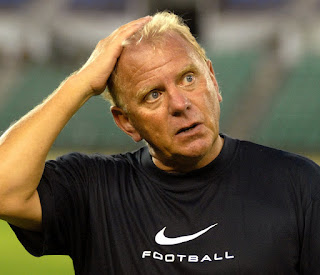
    India’s dismal run in the friendlies in UAE has brought us close to reality check. Is this the best team to represent India at the Asian Cup at Doha in January? Sample this. Apart from the SAFF Cup in 2008, India have played eight international matches away from home under Bob Houghton and lost all eight. India have conceded 32 goals and scored only five. The two major tournaments which India won — Nehru Cup and AFC Challenge Cup — have been on home soil. No wonder then, why the Englishman hinted at resigning if India fares poorly in Asian Cup. Yes, he is clever and calculative.

    But I’m not baffled at Indian team’s horrendous results. Houghton got whatever he wanted. Foreign tours, friendly matches, excellent facilities. But in the end, result is same like what other Indian coaches had given. The reason is Houghton has always been too stubborn in selecting the best team. I don’t know why he can’t see beyond a couple of players who are carrying niggling injuries and almost over the hill. But he says they are the best.

    A pool of 30 ‘best’ players signed a contract with AIFF and they have been training only for the Asian Cup since then. Doubts have been raised about the correct investment on some of the players. Are they really best enough to take on teams like Australia and Korea at Doha? Probably, we will get to know this after the Asian Cup in January.

    I strongly feel that some of the players from the current U-23 side which played in Asian Games should have been drafted into the senior team. More so because of their age and exuberance. Some of the senior players (I don’t wish to name them and offend their die-hard fans) are unfit. You may have seen some of them in Delhi in the last couple of years. I really don’t know how they have still managed to hang around in the team and then get to tour fabulous destinations in Europe and the Middle-East.

    Ideally some of the youngsters from Asian Games squad deserved a place in Asian Cup team. Look at Thailand. Bryan Robson brought some of his u-23 players to Delhi in September. The idea was to encourage them. Give them the right exposure. That’s how you build a strong team. Look at Japan and Korea. You will appreciate their excellent youth development programme.

    In fact, Japan, Korea and Iran’s rise in world football happened because of their honest and a no-nonsense approach. They have a system in place unfortunately which we don’t have. Indian football is a bit complicated one which can even flummox best coaches. Besides, you will find our foreign coaches, soon after they take over, will call for the exit of domestic tournaments, crib about lack of facilities and then talk rubbish about the country.

    Houghton has been given a royal treatment by AIFF much more than his predecessors like Jiri Pesek, Rustom Akhramov and Joseph Gelei, who had also trained the Indian teams in the past. Shouldn’t we ask him for an explanation now?

  • Bob, come and watch Durand Cup

    It’s great to see Durand Cup is still alive and kicking. This one tournament has always fascinated me since 1996. It is all about exuberance and fun. It’s late October and there is nip in the air. I grabbed a cup of hot tea and settled down firmly on the terrace of Ambedkar Stadium. I’m sure football lovers would agree: you get the best view from top.

    From the senior citizens to the youth and some aspiring footballers huddled in a small space. They discussed about Durand Cup and how it sustained itself through the years right from 1888. I also wondered, what is special about Durand Cup? Even the limited budget in recent years hasn’t stopped the Indian Army from organising the world’s third oldest football event.

    With almost all the domestic events have dried up, Durand Cup offer a ray of hope to some smaller teams who get little or no opportunity to play in Indian tournaments. In fact, Indian Army’s unflinching support has bolstered the event to the extent that even after its 123rd edition, it stands tall and firm.

    I remember, couple of years back, the sponsors and event management company had chipped in with a lot of promise. Pity, they couldn’t understand the significance of Durand Cup. They pitched in with hi-tech gadgets, big screens, played some English numbers on the loudspeakers. For them, it was like any other non-sport event. Dhol- tashe and tamasha. First, they ran out of money and later they ran out of ideas and innovations. And finally, they faded into oblivion. Last time, I was told, they are into squash tournaments!!

    Well, organising a football event is a tough job in India. And hosting Durand Cup is even more difficult in an age, when there would be more youths talking about EPL. Besides, the major reshuffling of national events recommended by Bob Houghton had even forced the Durand organisers to compromise with its schedule. I don’t understand why Houghton came up with such weird ideas. He should know, Durand Cup, like other domestic events, can be a great grooming ground for young and aspiring players. And closure of it would mean that football development would come to a standstill just like hockey.

    Protecting national team players is one thing. But on the pretext of shutting down tournament like Durand force us to think that the Englishman is venting his frustration against the system.

    Think cleverly and act smartly. I think, Houghton should be told.

  • Rare moments for Delhi football

    Rare moments for Delhi football


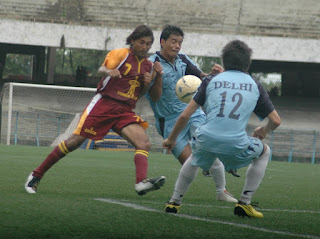
    The current edition of Santosh Trophy which is underway in Calcutta has brought out the best from Delhi’s modest football team. After their brave-heart 1-1 draw against mighty Bengal last week, Delhi, who leading with a 80th minute goal, was held to a
    1-1 draw by Tamil Nadu in their quarterfinal league match.

    I always felt that Delhi has the potential to do well. There are lot of talents in and around the city. Only if the local association put in some effort and do some constructive work. Interestingly, Delhi finished runners-up behind Bengal in the inaugural Santosh Trophy in Calcutta in 1941. But in the second edition, Delhi avenged their defeat. That remained Delhi’s only triumph in Santosh Trophy.

    When I came to Delhi in 1996, I had heard a lot about Delhi football. So, once I was in the city, it became a daily routine for me. I used to hire a rickshaw and roam around in old Delhi. I think it is the best way to feel the pulse of its historical existence. Rickshaw is the best transport available to pierce through its crowded serpentine alleys. Surrounded by crumbling walls and three surviving gates, purani Dilli is still very vibrant. It seemed so as the driver pedalled his rickshaw through the thick crowd.

    It is a city within a city. It may not be fascinating for the others but I had enjoyed every bit of my stay in the crowded Idgah Road and Sadar Bazar. So after settling down, I had experienced every bit of those rickshaw rides through its small galis. They are lined with 17th-century havelis whose once ornate facades are now defaced with rusted signs and sprouting satellite dishes. There is this uncanny habit in me. Whenever I am in a new city, I usually drag myself to look for football links.

    I was told that the Walled City had encourgaged and patronized the game to a great extent. I wondered if I would be able to reconnect football to Delhi since there was no Mohun Bagan-like tents. Or even a literature about its footballing history. Then someone had informed me that “if you want to search for the football passion, visit the Walled City”.
    Where is Mohun Bagan-like tents? Where is Maidan? I used to wonder if there were any football clubs. I had frowned then. But slowly I realized that despite the absence of club tents, football lived in every nook and corner of old Delhi.

    So for a football journalist, the visit was worth taking.

    In the halcyon days, driven by passion for the game, old Delhi traders and businessmen did not mind diverting their business profits into football, helping the emergence of well-known clubs like City Club, Shastri FC, Youngmen, Mughals, and Indian Nationals. While the clubs flourished, the game attracted the middle-class. Such was the clubs’ appeal that even common folks came forward with contributions as clubs like Indian Nationals or City Club became a part of their lives.

    Nationals, for instance, came into existence during an informal chat between some of the die-hard Delhi footballers of the pre-Independence era. There was an urge and interest to create a medium to express their intense love for football. So when YS Yadav, Sheikh Mohammad Shafiq, Mohammad Yasin and Hameed Khan sat under a tree at the historic Sunehri Masjid in old Delhi pre-1947, it had turned out to be a sunehra moment for Delhi football. Views were exchanged and Indian Nationals Football Club came into existence. The decision to form the team was later unanimously passed during a meeting held at the bylanes of historic Turkman Gate at House No. 2383, Kucha Mir Hashim, Chitli Qabar.

    Unfortunately, some of these clubs are up against harsh reality. How to carry on their legacy without funds? I found a stark similarity between the old Delhi’s decay and the dwindling fortune of Walled City’s football culture which was once so dominant. Passion alone cannot take them forward. The clubs have ceased to enjoy patronage from the locals as well. And businessmen no longer support them as they used to. In fact, from 1996 till date, there has been a sharp decline in the interest among the locals.

  • Uruguay: Old wine in new bottle

    Uruguay: Old wine in new bottle


    I was quite young then. But I remember watching Uruguayan football team in 1982 at Calcutta. They had come for the inaugural Nehru Cup. I can even recollect the glimpses of Enzo Francescoli, the defiant, irrepresible attacking midfielder. For me and till now, he remained the only passport to Uruguayan football. Much later at the 1986 World Cup, Francescoli had popped up again. I think Denmark had humilated Uruguay 6-1. He had scored the only goal. Like most of us who admire Latin American football, were left in a state of shock. What had happened to Uruguay? We wondered. I guess, that was one of their most disppointing defeats in World Cup. Soon we started losing track of Uruguay.

    Uruguay didn’t create much ripples in 1990 World Cup as well. Slowly and slowly their famed supremacy took a tumbling. Considered one of the pioneers of Latin American football and the two times World Cup winner, Uruguay never again captured the imagination until this time at South Africa. Their re-appearance at the world stage was as surprising as their disappearance. This time the blue shirts came with an attitude and aggression which even the Dutch and German teams surely would have appreciated by now.

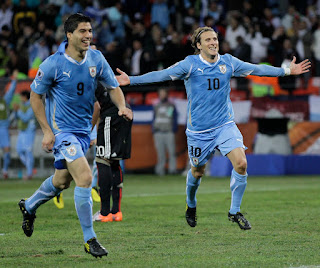
    While the more experienced Brazil and Argentina still continue to baffle many football writers with their none-too-impressive outings, Uruguay became the only team from South America to make it to the last four. It has been a remarkable transformation. They seemed unlucky to go down against Holland in the semis. And even more unfortunate to miss out the third place spot. In the play-off, Germany had a harrowing time against the fluent, artistic and speedy game of Uruguay. While Messi appeared clueless and struggled to find the target throughout for Argentina, Diego Forlan simply showed why he is the world’s top strikers. His five goal feat speak a lot about his striking ability. At 31, Forlan, is unlikely to play at a third World Cup finals, but even then he left an indelible class as an excellent poacher. The Atletico Madrid star almost forced extra-time against the Germans as his freekick rattled the crossbar in the final action of normal time.

    Still we go ga ga over Messi, Kaka Rooney and Cristiano Ronaldo. Forlan gave us what every football lover wanted. Breathtaking goals, amazing ball-control, great turn and clinical finish. Why wouldn’t we talk about this blond-haired front man. His goal-scoring spree in South Africa provided yet more proof that his finishing prowess remains undiminished.

    For Uruguay, however, this is the beginning of a new cycle, Uruguay is where it should be. They demonstrated that all the hard work got its just desserts. Much credit goes to their coach Oscar Tabarez. While the entire world was busy with what Dunga or Maradona did, Tabarez was happy with his low profile persona. It’s their best finish in 40 years and he can take full credit after having revived Uruguay’s fortune in world football.

    Tabarez is one of the more thoughtful coaches. He doesn’t have the stubborness of Dunga or any shades of the passionate Diego (Maradona). Yet, he is a man of firm convictions and clear ideas when it comes to footballing brain. Since 2006 he got down to serious business in re-arranging his country’s football system. He completely overhauled the national set-up. Helped Uruguay finish fourth place at the 2007 Copa America and masterminded their qualification for World Cup this year. He has also revitalised the country’s youth football. In 2009, along with Brazil, Uruguay were the only side to qualify for both the FIFA U-17 and U-20 World Cups.
    No wonder Tabarez remained the most successful Latin American coach in this year’s World Cup.

  • It’s time to take note of Bundesliga

    It’s time to take note of Bundesliga


    All this while I have been discussing with my friends about this German side. I never, ever said about an Argentine win. Both these teams were my pre-tournament favourites. I admire Diego Maradona. But then being passionate is one thing and translating that passion into performance on the ground is a different ball game. For all of those who had been cheering on for Argentina had never spared a thought for this German side who almost imperceptibly developed soccer’s holy-grail blend of youth and experience.

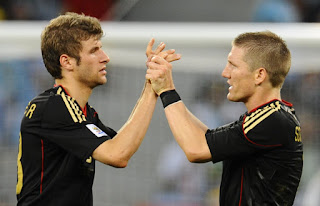
    We all talked about Messi. Tevez. Higuan. But did we ever analyse this German team which is full of extraordinary talent and exuberance? The Germans play a team game. Its more authoritative unlike that of Argentina being too much Messi-centric. Bastian Schweinsteiger, Mesut Ozil, Thomas Mueller, Sami Khedira, Podolosky, Klose were bundles of fizzing energy. The impeccable passing sense, excellent ball control manned by an intelligent and workaholic midfield tore apart Diego’s Argentina.
    Surprisingly, the media never talked or wrote either about German players or their master Joachim Loew who now deserves huge credit for giving the youngsters their head. But the 50-year-old also kept faith with some old hands when all around him were questioning his wisdom.

    In fact, the entire world media ran after Kaka, Cristiano Ronaldo, Messi, Rooney before and during the World Cup. But we never came across a profile on Schweinsteiger. He is the link between young and old, defence and attack. Still only 25 he half-belongs in the youthful vigour camp but with 79 caps already he is also one of the wise old heads of the squad. He has matured into Germany’s focal point. Can you forget that wicked freekick which found Mueller for the opening goal?
    He dominated the centre circle and outshone everyone. Spreading passes long and short, prompting his team mates into space then overlapping and joining the attack when he saw a gap, it was a midfield masterclass that Michael Ballack could surely only marvel at.

    Last but never the least, why can’t we talk, write and follow these German players and the Bundesliga. Why only we have to watch a market-driven English League dominated by glamour and hype? The class, the essence of being a champion is determined by the dint of performance on a bigger stage like World Cup, isn’t it?

  • Not Just A Hand of God

    Not Just A Hand of God


    Cut to 1986. For the first time ever, a football World Cup was beamed live in India. For the tiring eyes who had to painstakingly watch Indian football, the Mexico World Cup brought some kind of a succour. There was an added bonus as well: Diego Mardona. The hero, the leader and a great team-man.

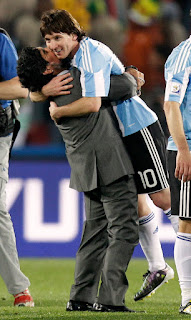
    Maradona has a legion of admirers and a world full of doubters. His ‘hand’ still confuses many a football pundit over that controversial goal against England in Mexico. After watching him on the sidelines during Argentina’s first two games as in World Cup, I wonder why he remains a great character. The pint-sized genius hasn’t lost his qualities. He is a great motivator. A great guy who transponds energy to his teammates. Whenever Argentina scores, he jumps like a kid. He hugs everyone of his coaching staff and players. In him, we find a simple, down to earth persona which isn’t fake.

    What we saw of Argentina on Thursday was a reflection of Maradona’s Argentina of yore. Rich in attacking variety. A master class in midfield creativity from Lionel Messi. Set piece surprises reflected an exciting Argentine cocktail of attacking flair at the World Cup. The sheer skills of their multifaceted attack reminded us of Argentina when Maradona played a game as a god.

    About the most controversial goal in football history, Maradona once said: “I did it with hand of reason. It is like pick-pocketing the English and stealing a win.” This is Maradona. So even if England hates him, rest of the world adore his qualities. No wonder, millions and millions often vote him as the best in the trade. Because he is a leader. A terrific guy who is so passionate about football. There is tinge of a mercenary in him. So even Pele accuses him, he isn’t bothered. Because he has a soul. A wonderful heart for football.

    No wonder then, this generation gladly accepts him as the best footballer of the century. Because he is a rebel. A Che Guevera fan. A role model for any youngster. On the field and off it. He is no pretender. And that’s make him most endearing. If he dodged past his rivals defenders, he did that boldly and with a touch of class. More than his sublime skill, Maradona was known for his rebellious streak in him. When George Bush showed up in Argentina in 2005, the usual protests against him were led by Maradona. The little genius asked Argentines to march against the “human garbage” Bush.

    Whether it was his ‘Hand of God’ goal or playing hide-and-seek with death (following his overdose of drugs), the Argentine still remains the best and most adorable footballer of our generation.

  • Korean Model and Indian Football

    Korean Model and Indian Football


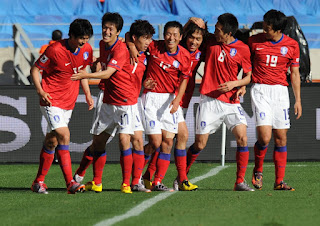
    Watching Korea and Japan football teams at the World Cup, as Asians, we might as well think, where is India? Korea remain the most successful and consistent Asian teams at the World Cup while Japan’s J-League started in 1993. In between these 17 years, they have played in four World Cups.

    Indian football administrators need not organise a travel to Portugal or Spain to draw inspiration for our success-starved Indian team who are getting ready for the Asian Cup in January. We don’t know the link between Asian Cup and European destinations. The best thing AIFF would have done was to take a cue from Korea and Japan. Let me tell you, both these teams including North Korea have a selfless approach to do something for football under their home-grown coaches.

    As for us, we are still to start our preparation. The tentative plan to travel to Portugal (where the month-long camp would be held) is from June-end. India is going to play South Korea in Asian Cup at Doha. Is the six-month preparation good enough to challenge Korea, Australia and Bahrain in Asian Cup? This World Cup would have given our own football pundits a great opportunity to follow the Korean game. Are we really taking this task seriously? Have we ever thought of understanding Japan and Korea’s football culture? Their strategy, planning and a dedicated approach. For the ‘pundits’ at AIFF, understanding the Korean model would require an iota of intelligence. It’s not elementary arithmetic. It’s like solving some tough algebraic equations or some geometrical theorems. And to understand mathematics, one has to study it and devote a lot of time.

    As for Korea, the officials turned back to a home-grown coach in December 2007. They must have thought that the time was ripe to adapt the lessons learned from the Dutch while restoring a native influence to give the best of both worlds. As it turned out, Huh was the right man to do the job by building a balanced squad which is regarded as being by far the strongest ever Korean team in World Cup history.

    Let me tell you who heads the technical committee of Korean football. Lee Hoe-Taik. He was the coach in 1990 where Korea slumped to defeats against Belgium, Spain and Uruguay. And after some failures to win a match in the next two World Cups by their home grown coaches, it was inevitable that the Koreans would turn to the experience and know how of foreign coaches. Understandably, after the learning process was over, the Koreans brought in their own experienced coaches at the helm.

    One of the reasons why Huh could ring the changes so successfully in such a short period of time is that the he has considerable experience of World Cups. He participated at Mexico 1986 as a player where he faced Diego Maradona. He joined the national squad as a fitness trainer in 1990. Huh was then an assistant coach in 1994 where the Taeguk Warriors finally began to make an impact on the world stage with draws against Spain and Bolivia and a loss to Germany. Huh’s loyal, determined character makes him different from the rest. He doesn’t rests on his laurels.

    Last week, Huh created a small piece of history by becoming the first Korean coach to win a World Cup match. Korea’s fifth victory in World Cup did not only mark their third consecutive winning start in the event but also showed what they are capable of on their own.
    Are we serious about our own football team? Sometimes, I get this gut feeling that we are running a fake show. Everything seems to be fake. Football promotions. Promise. Deliverance. Determination. How come these smaller nations are so good in football. There is definitely no short cut recipe for success. Hard work, determination and honesty have paid off for Korea, Japan and even for North Korea who have qualified after 1966. Why can’t India have a good and a determined side?

    I guess, AIFF and Bob Houghton would know better.

  • Kaho na pyar hai

    Kaho na pyar hai


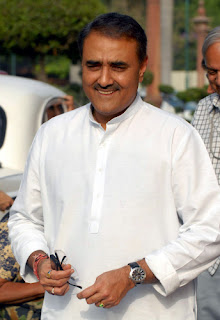
    Mr Praful Patel is a good host. I must admit. Invited by him to attend a dinner at his sprawling kothi in central Delhi, we were happy. Rarely we have seen AIFF presidents hosting journalists and AIFF officials together at their residence. Mr Patel seemed to be an exception.

    With Bob Houghton firing his salvo against AIFF secretary Alberto Colaco, the get together last week became very important. AIFF members from “Kashmir to Kanyakumari” had assembled right at the power centre on that night. It wasn’t surprising to see everybody wore a wry and a forced smile. Most of them were tight-lipped about Bob Houghton’s resignation besides the ridiculous manner in which the Federation work is handled by Colaco, who however looked somewhat lost in the crowd. In the darkness of the night, it was becoming difficult to read his face. We also couldn’t notice whether his cheek glistened with tears. After all, he is the person who has brought Indian football to such a standstill. I think he was feeling a bit embarassed to move around in the crowd.

    But one thing I still couldn’t understand. Why the influential members (vice-presidents & ex-co members) remained quiet even after his spat with the English coach. But nobody knows who had authorised the Goan to look for a new coach. If Colaco has been branded as incompetent, what would you say about the members who enjoy all-paid trip to Delhi, gulp a couple of pegs and then hob-nob with the ministers.

    Actually, none of these officials want to blast Colaco in the open. But whenever there has been a Colaco-bashing in the media, they would smile. That’s it. At the AIFF meetings, none of them would be vocal. So, what are their roles? Participate in gossips and add fuel to the fire? Or look for outstation tours with the Indian teams. Ask them about the development programmes, I’m sure, they will stammer. Enquire about their contribution to their respective states, they will drag you into a different conversation.

    We have been told and re-told about Bob’s status that he is staying. But Colaco didn’t speak much because he had already spoiled everything. So finally, with all his experience, Mr Patel had to douse the flame (Bob controversy), for now. And Colaco heaved a sigh of relief.

  • We need positive thinkers

    We need positive thinkers


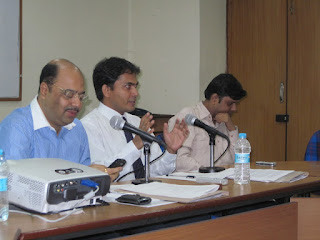
    I was visiting my home town almost after a year. Calcutta welcomed me with its sudorific and sticky weather. So much so that my spotless white shirt was almost wet even before I could reach the Jadavpur University campus. Yet, the energy sapping heat couldn’t really dampen my spirit as football and Calcutta were on my mind. Thanks to the Valerian Soccer Foundation and Jadavpur University, who had invited me to speak at their International Summit on Football.

    I was to speak on a topic which has been my forte “Indian Football and It’s Uncertain Future”. To be honest, I didn’t want to sound too negative and cynical in my speech. But the content of Indian football is much of negativities that I couldn’t help. Though, till that point of time, Mahindra United still existed as a football team and Indian coach Bob Houghton didn’t vent his frustration with his pay package and contract.

    But a week after my speech at the seminar, I think, I was right.

    As I write back on the upheaval, I still believe, that some pragmatic thoughts, a bold effort can do a world of good to Indian game. There has to a definite plan and programme and the presence of smart marketing executives who have a football knowledge. After having watched Indian football during these transition period first a young follower in Calcutta (from 1981 to 1993) and then as a soccer writer from 1994 till date and having traveled throughout the country, I can foresee a better future. Provided, we have a system under young administrators where our game can grow and breathe properly.

    Let’s take Calcutta for example. Clubs there are like the Marxist government of West Bengal. They never changed with time but followed an age-old pattern. Ironically, like the Communist-led Bengal, the clubs are also struggling to stay afloat. Even with the advent of EPLs, World Cups and top international events which was beamed live and the presence of a strong media, Mohun Bagan, East Bengal and Mohammedan Sporting officials didn’t embrace professionalism. They stuck to an old system. They completely ignored the importance of a dietician, physical fitness trainers. Besides organising their local league matches during the intense heat of the summer slowly sounded the death knell for Calcutta teams. Like the Marxist regime in the state, professionalism is one word which the club officials haven’t understood well.

    Now let’s come to the national perspective. Money is a big factor in modern sport. Why should corporates invest money? What are the ROIs? From 2007 to 2010. Indian football has had some the most memorable victories in recent times. Nehru Cup win could have helped the Indian federation shut out those who cast a doubt on its future. Has Alberto Colaco been able to create a brand out of these victories? The sequence of Subrata Paul’s penalty saves in the final hogged the limelight in the 2009 final. But sadly, AIFF never made an effort to make this news a little bit bigger.
    Three years back, a top auction house committed themselves to promote football. They decided to sponsor Durand Cup, world’s third oldest football event. But the honeymoon between the corporate and the event management company got over quickly. Those who managed the Durand Cup were non-entities in football. I’m sure the entire lot inside AIFF lack in creativity.

    In sports, like in other walks of life, you cannot have emotional fools. You need to have a realistic and a practical approach. I guess, that’s what is lacking in Calcutta clubs. Calcutta clubs lives on a tradition as I had said like the Marxist rulers of Bengal. The biggest reason for their decline is that they couldn’t adjust to the changes. In Mohun Bagan for instance, the physio is not a qualified one. But he has been doing his job more than 30 years now. It was only during East Bengal’s campaign for the Asean Cup in 2003 that the then coach Subhash Bhowmick recommended for gym, swimming pool and a qualified fitness trainer for the players. But then that was it.

    Actually, AIFF doesn’t have a definite plan and strategy to market the game. They are yet to deliver on this aspect. There are no promotional activities. They don’t know how to create a hype. After India won the Nehru Cup last year, the best thing the AIFF could have done was to promote the entire team and create a brand. The picture of the Nehru Cup wielding Indian team faded faster. Even when the U-23 team won the SAFF Cup in Dhaka in December, the Federation failed to identify the brownie points. All such victories by your national teams can give you a better ROI if they are marketed well. We need marketing experts instead of a power-hungry secretary who just want to make Football House his own.

    I’m a positive person and I still see a hope. But in the first place, the AIFF should engage genuine professionals having adequate knowledge about the game and those who have a vision. Right now, the Federation needs young, energetic, unselfish and honest secretary. There has to be some accountability for his action. Proper representation from the states to the executive committee is also important. Mr Praful Patel has brought in resources. Now to spend those funds you need some qualified finance managers.

    During a visit to a Delhi school, I was shocked to learn that none of its tiny players knew our first Indian XI (barring Baichung Bhutia and Sunil Chhetri). It was quite disappointing. All they know is about Rooney, Kaka, Ronaldo, Messi. I don’t blame them. I blame the AIFF. I blame the coaches at the grassroot level who train them. How can somone become a football coach without knowing Indian football history? It’s a crime. Chhetri’s joining the MLS can infact become a great selling point for AIFF. Only if they had advertised themselves in a proper way. Those who are involved with football should explain and motivate the kids citing Chhetri’s example. But who wants to work hard?
  • Mr Alberto Colaco, RTI is on its way

    Mr Alberto Colaco, RTI is on its way

    Early January this year, the Delhi Hight Court had asked the Indian Olympic Association (IOA) and the Commonwealth Games Organising Commitee (OC) to shed opacity and set up an office to disseminate information and depute a public information officer (PIO). Closely on its heels, the Sports Ministry also brought all the sports federation under the ambit of Right To Information (RTI).

    All of us know that none of these sports bodies are clean. Not even our own All India Football Federation (AIFF). Let’s take the recent recruitment done by its secretary Alberto Colaco, who now seems the be-all and end-all of Indian football. He recruited Dempo coach Armando Colaco’s daughter in the AIFF as co-ordinator, national team. We are not sure what’s her qualifications. Besides, whether the post had been advertised on AIFF website. Alberto kept all of us in the dark.
    But I guess, we all have the right to know the exact experiences, the job-profile of the candidates who are being recruited for AIFF posts. Aren’t we talking about clarity in the system? But who’s going to stop the powerful-hungry AIFF secretary? I think, a RTI affidavit can question his recruitment policies.

    Under the ambit of the transparency Act, I’m sure, is expected to open the floodgates of pointed RTI queries directed against these sports bodies, seeking information about their management, grants and administration. The judgment will have an impact in injecting an element of accountability not just in IOA and OC, but in all the sports federations.

    In the recent financial committee meeting of AIFF, Colaco had proposed two names — BMR Mehta and Anil Kamat — as the new joint secretaries of AIFF. Well, let’s come to the basics. What are the qualifications of these two gentlemen? While Mehta was handling media as director (he had joined federation 5 years back without having football background), Anil has been Colaco’s trusted colonel from Goa. He is director tournaments. But most importantly, he is Colaco’s ‘mole’ in the enemy camp. So he deserves to get the reward for helping Colaco become the strongest and powerful among all the AIFF secretaries till date.

    But now, I’m sure, he will have to reply to RTI queries which will be coming from all quarters. Be prepared Mr Colaco, this time, you may not heave a sigh of relief.